After surgery
Stoma care: changing the pouch, irrigation and choosing supplies
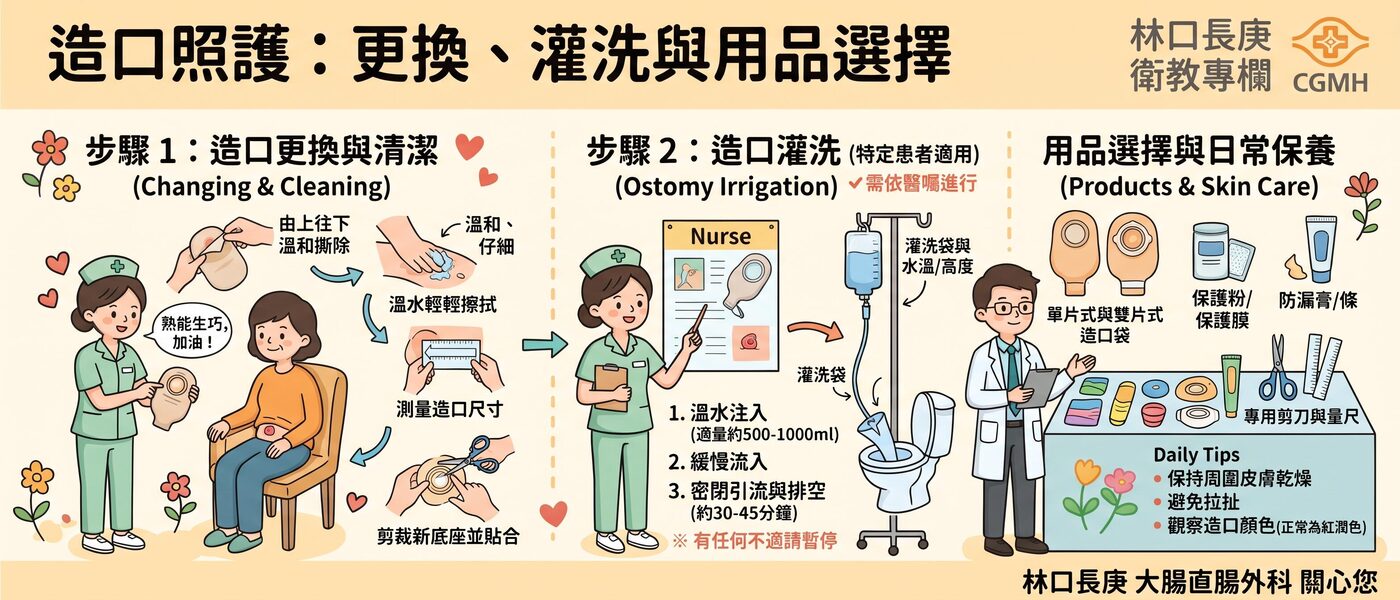
Almost everyone feels they will never manage when they first face a stoma. It is like learning to ride a bicycle: the first few attempts are clumsy, and after a little practice it becomes routine. Most people are fully independent within a few weeks.
Getting to know your stoma
A stoma is an opening formed by bringing a section of bowel out through the abdominal wall. It has no nerves, so touching it does not hurt. The lining is pink and moist and looks rather like the inside of your cheek. That is normal.
The stoma itself has no sphincter, so it cannot be held in and output comes away on its own. That is why a pouch has to be worn at all times. Slight bleeding when cleaning is normal: the lining is delicate, much like gums bleeding when you brush your teeth.
Changing the pouch
Change it when the bowel is least active, such as after waking and before eating. Lay out everything you need before you start; realising halfway through that something is missing is when things go wrong.
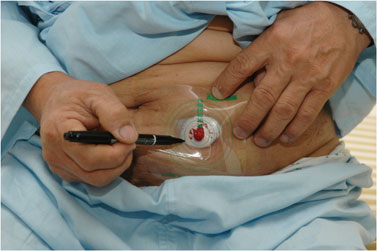
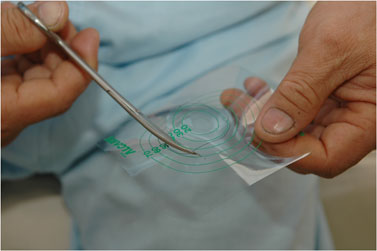
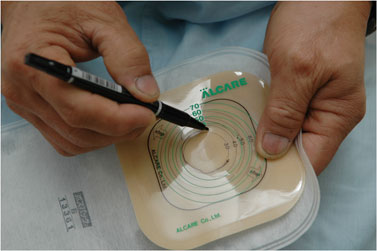
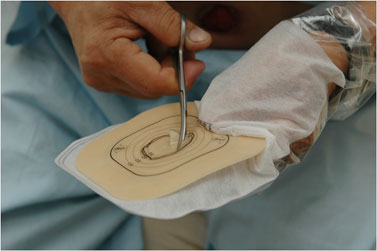
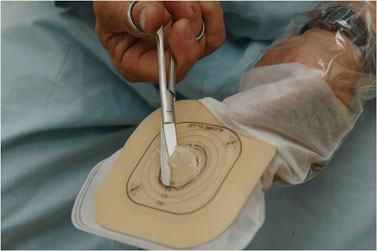
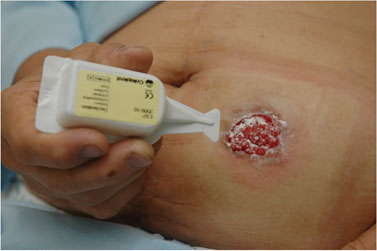
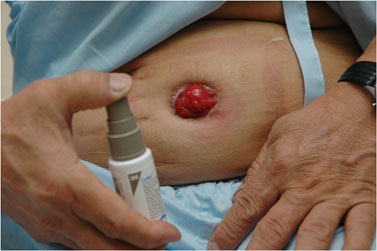
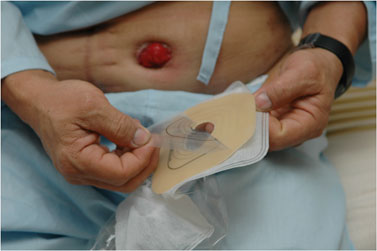
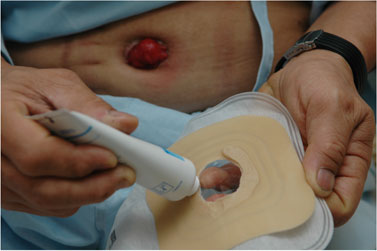
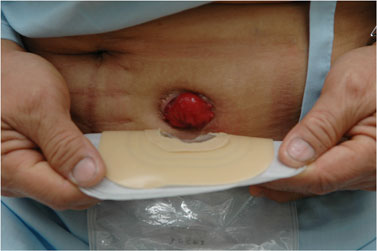
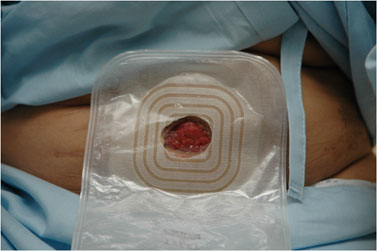
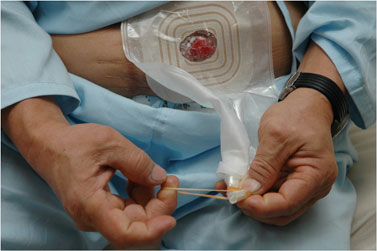
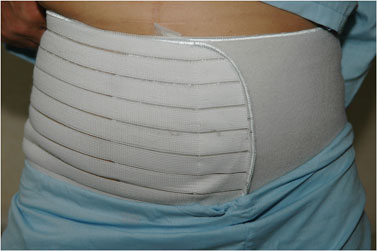
In outline: measure the stoma, cut the baseplate to that size, peel the old baseplate away gently from top to bottom, clean the surrounding skin with water and a soft cloth, dry it completely, then line up the new one and press with a warm palm for a few minutes to help it seal.
- The size of the opening matters. Cut too large and output reaches the skin and breaks it down; cut too small and it rubs the stoma and causes bleeding. The stoma shrinks over the first few weeks after surgery, so measure every time.
- The skin must be completely dry. Damp skin is the commonest reason a pouch does not stick.
- Plain water is enough for cleaning. Do not use oily cleansers or antiseptic solutions; they interfere with adhesion and irritate the skin.
Irrigation (for some colostomies)
Irrigation means instilling warm water through the stoma at regular intervals to bring on a bowel action, so that there is little output in between. For those who get on with it, day-to-day freedom improves a great deal.
It does not suit everyone. Irrigation is generally for some people with a colostomy and is not used for an ileostomy. Whether it suits you, and how to do it, must be discussed with a stoma nurse or doctor first. Do not try it on your own.
It has to be done regularly at a set time to establish a rhythm, and each session takes a fair while, so whether it suits you also depends on your daily routine.
When the skin becomes sore
Redness, stinging and broken skin around the stoma are the commonest problem. In the great majority of cases the cause is output leaking onto the skin.
So the answer is not a cream but finding out why it leaks: is the opening cut too large? Is there a skin crease stopping the baseplate lying flat? Is the stoma sitting low? Is it not being changed often enough? Each of these has a product that solves it, such as barrier paste, a convex baseplate or a belt.
Skin problems do not settle by themselves. Come back to the stoma care room early rather than waiting until the skin breaks down.
Eating
The good news: you can eat most things. There is no need for long-term restriction.
- In the early weeks, try one new food at a time and watch what happens, so you learn what you are sensitive to.
- Chew slowly and thoroughly, especially high-fibre foods that are harder to digest.
- Drink enough — particularly important with an ileostomy, where less water is absorbed and dehydration comes easily.
- Some foods cause wind or odour. Adjust by your own experience, but there is no need to give them up.
Daily life
You can shower, with the pouch on or off; water will not get in. You can dress normally, as ordinary clothing does not press on the stoma. You can exercise, avoiding heavy contact and activities that raise abdominal pressure for long periods. You can travel, taking spare supplies and keeping a set in your hand luggage. Most people return to work and to social life.
Seek medical care promptly if:
- The stoma turns dusky purple, grey or black
- The stoma becomes markedly swollen, protrudes further, or retracts into the abdominal wall
- There is no output at all for several hours, together with bloating, abdominal pain or vomiting
- Output suddenly increases and becomes watery, with thirst, reduced urine or dizziness
- The skin around the stoma breaks down and stays painful
- Bleeding from the stoma is heavy or will not stop
Our division has a stoma care room, and you are welcome to ask for help with any difficulty. Do not struggle alone: most problems already have a solution, and you only need someone to tell you what it is.
Every patient is different, and this article gives general principles only. Your own tests and treatment should follow your doctor's advice.