After surgery
Eating and bowel habits during treatment
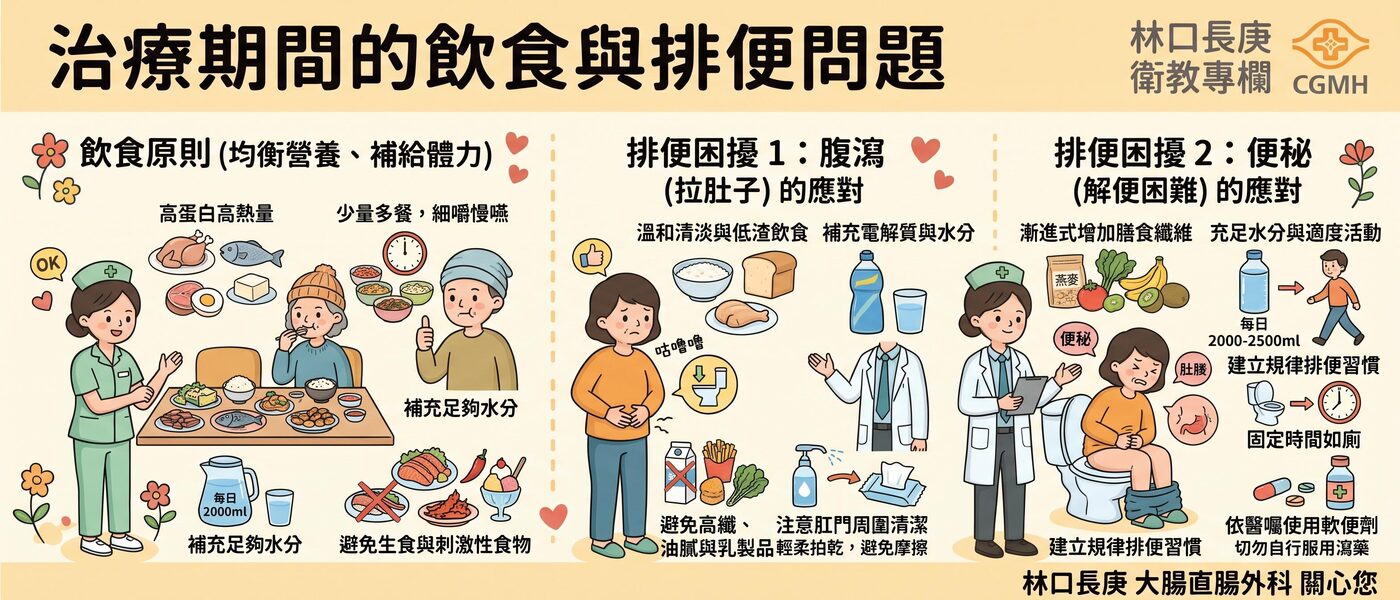
"What am I actually allowed to eat?" is one of the questions we are asked most often in clinic. The answer is usually far less restrictive than people expect: there is no list of forbidden foods that must be followed during colorectal cancer treatment. What does need attention is the change in bowel habit.
Basic principles for eating
- Eating enough matters most. Your body is repairing itself during treatment, and too little energy and protein slows recovery and reduces how well you tolerate treatment. Many people are afraid to eat in case they "feed the tumour". There is no basis for this, and it does harm.
- Normal and balanced is enough. No special anti-cancer diet is needed.
- Be cautious with supplements of unclear origin. Some ingredients interact with treatment drugs or affect liver and kidney function. Tell your doctor before taking them.
- Cook food thoroughly, especially while your white cell count is low.
Diarrhoea
Diarrhoea is common during treatment. It may come from chemotherapy, radiotherapy, or from the way surgery has changed the bowel.
Replacing fluid is the most important thing. The dehydration diarrhoea causes is often more dangerous than the diarrhoea itself, particularly alongside vomiting or poor appetite. As well as water, take drinks containing electrolytes.
For a while, cut down on fatty foods, high fibre and dairy, choose things that are easier to digest, and build back up once things settle. Ask your doctor before taking anti-diarrhoeal medicine — in some situations stopping diarrhoea yourself can delay recognising a problem.
Contact your team if: you have watery stools several times a day that continue, or diarrhoea with fever, blood in the stool, severe abdominal pain, or signs of dehydration such as thirst, markedly reduced urine or dizziness.
Constipation
Constipation can also occur. Common causes are reduced activity, not drinking enough, and the effects of some anti-sickness and pain medicines.
Start with the three basics: fluid, fibre and movement. If that does not work, discuss a stool softener with your doctor rather than using stimulant laxatives long-term on your own.
If constipation comes with bloating, abdominal pain and vomiting, and you are passing no wind at all, seek care promptly. This may not be simple constipation.
Changes in bowel habit after surgery
This section is written particularly for patients who have had rectal surgery.
One of the rectum's jobs is to store stool. After part of it is removed, that storage space is smaller, and the result is often: more bowel movements a day, a small amount each time, a feeling of not having finished, little warning before you have to go, sometimes difficulty holding on, and having to get up at night.
Together these are called low anterior resection syndrome. It is not a failed operation and not a recurrence, but the natural consequence of a change in anatomy. It improves gradually for most people, though that can take many months or even a year or two.
Things that help: regular meal times, noting which foods make it worse, pelvic floor exercises, and discussing medication with your doctor. Please do not stay silent because you think it is something to be endured. It affects quality of life a great deal, and there are ways to improve it.
Eating with a stoma
See also "Stoma care". The principle is that most foods are fine; try one new food at a time and see how you react, chew slowly and thoroughly, and pay particular attention to drinking enough.
Every patient is different, and this article gives general principles only. Your own tests and treatment should follow your doctor's advice.