Screening
Bowel cancer screening and colonoscopy
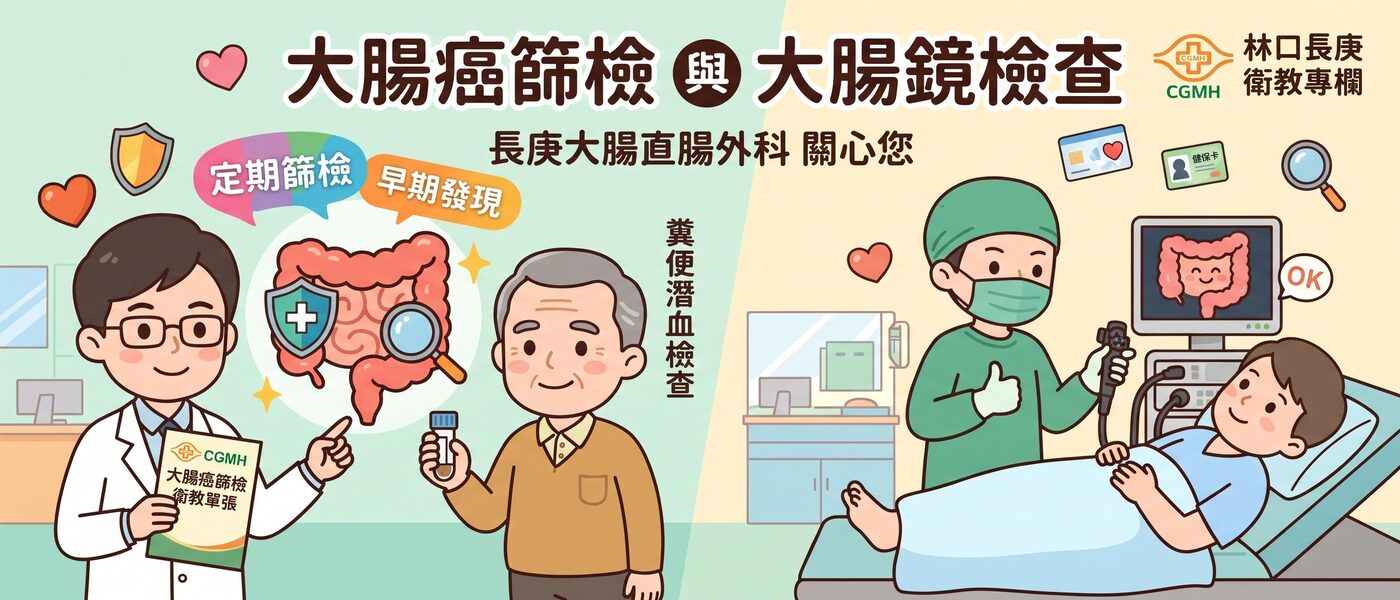
Bowel cancer is one of the few cancers that can be stopped before it ever becomes cancer. This article explains two things: whether you qualify for free screening, and what happens if the result is abnormal.
Why screening works
Almost all bowel cancers begin as a small polyp that changes slowly over several years. Those years are the opportunity: if the polyp is removed at colonoscopy while it is still a polyp, the cancer never happens.
This is different from most cancer screening. Most programmes can only find a cancer earlier. Bowel cancer screening can prevent the cancer from forming at all.
Who is entitled to free screening
Taiwan's Health Promotion Administration widened the programme in January 2025:
- Ages 45 to 74: a free faecal occult blood test once every two years.
- Ages 40 to 44 whose parent, child or sibling has been diagnosed with bowel cancer: also once every two years.
You can collect a sample tube from any clinic or hospital contracted with National Health Insurance, or look out for community screening sessions.
How the faecal occult blood test works
The test looks for blood in the stool that is invisible to the eye. Polyps and tumours bleed easily from their surface, and even a very small amount shows up.
It is an easy test to do: no dietary restriction, no fasting, and you collect the sample at home. Once you have the tube, take a small amount of stool from a dry part of the toilet bowl or from paper, follow the instructions, and return the tube to the clinic.
If the result is positive
This is the most important section of this article.
A positive faecal occult blood test must be followed by a colonoscopy. Among people with a positive result, roughly one in twenty is found to have bowel cancer, and many more have polyps that have not yet become cancer. Studies show that people who test positive but do not go on to have a colonoscopy have a clearly higher risk of dying from bowel cancer.
A positive result does not mean you have cancer. Haemorrhoids, polyps and inflammation can all cause bleeding. But precisely because they cannot be told apart from the test alone, a colonoscopy is needed to look directly. It is the only way to be sure.
What a colonoscopy involves
The doctor passes a thin flexible tube with a camera at its tip through the anus and examines the lining of the entire large bowel. If a polyp is seen, in most cases it can be removed there and then, so examination and treatment are completed in one session.
Many people worry that it will hurt. This hospital offers sedated ("painless") colonoscopy, carried out with assessment and monitoring by an anaesthetist, during which you feel nothing. Whether it suits you, and what it costs under National Health Insurance, can be discussed with your doctor in clinic.
Bowel preparation before the test
This is the part that depends most on you, and the part most often underestimated.
The bowel must be clean enough for the doctor to see the lining. If stool remains and blocks the view, small polyps can be missed, and the examination has been wasted. The hospital will give you the bowel preparation medicine and dietary instructions. Please follow the timing and the quantity exactly. Not finishing the preparation, or stopping early, most often means the test has to be repeated on another day.
If you take anticoagulants or diabetes medication, or have other long-term conditions, tell the team before the test so your medication can be adjusted.
How soon should it be repeated
There is no single answer. The interval depends on what was found this time: whether there were polyps, how many, how large, and what the pathology showed. If everything was normal the gap can be long; if certain types of polyp were removed, follow-up needs to be closer.
Follow the advice your own doctor gives when explaining the report, and write it down. It is easily forgotten a few years later.
If you have symptoms, do not wait for screening. A lasting change in bowel habit, blood in the stool, unexplained weight loss or anaemia should all be investigated directly. Screening is designed for people without symptoms; if you have symptoms, what you need is a diagnosis, not a screening test.
Every patient is different, and this article gives general principles only. Your own tests and treatment should follow your doctor's advice.